Tire Size Calculator, Fitment Comparison & 3D Viewer
Compare tire dimensions, see how a new size changes your speedometer reading, view tire sizes in 3D, and read practical safety guides before you change your vehicle’s wheels or tires.
Tire Calculators & Tools
Simple tools for drivers, mechanics and anyone planning a wheel or tire change.
3D Tire Comparison
View two tire sizes side by side in 3D. Rotate, zoom and check the overlay dimensions to judge how they compare.
Tire Size Comparison
Compare overall diameter, section width, sidewall height and circumference, plus a speedometer table from 20 to 90 mph.
Tread Depth & Safety
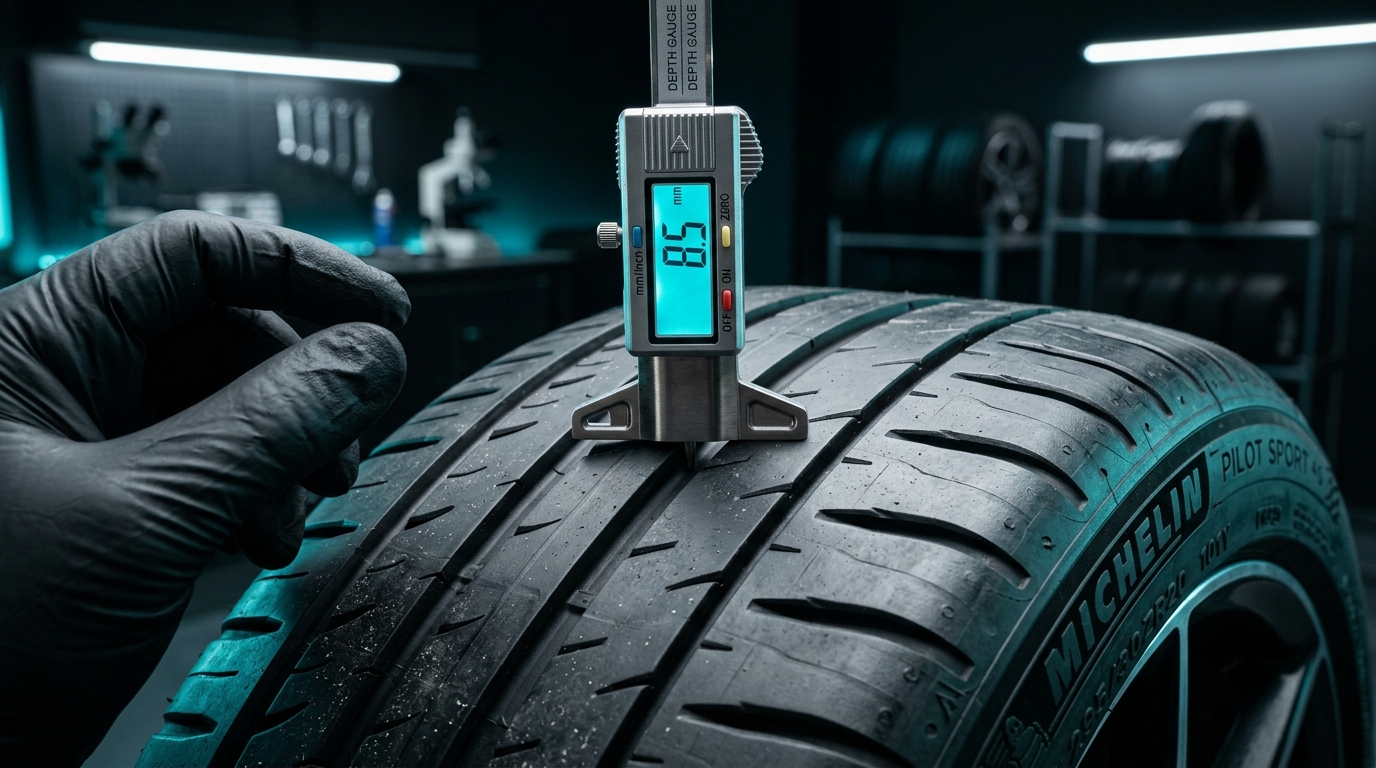
Learn how to measure tread depth, why wet grip drops as tread wears, and how to use the penny and quarter tests.
Tire Size & Safety Basics
Two things that affect every driver: speedometer accuracy and how much tread you have left.

How Tire Diameter Changes Your Speedometer Reading
Your speedometer and odometer count wheel rotations. When you fit a taller tire, each rotation covers more road than your vehicle’s computer expects.
- Taller tires: the speedometer reads lower than your true speed.
- Shorter tires: the speedometer reads higher than your true speed.
- The ±3% rule of thumb: keep overall diameter within about 3% of the factory size, and check your owner’s manual.
Stopping Distance & Minimum Safe Tread Depth
Grooves channel water away from the contact patch. As tread wears down, a tire clears water less effectively, which raises the risk of hydroplaning at highway speed.
- 10/32″ to 11/32″: typical depth on new passenger car tires.
- 4/32″: wet braking starts to get noticeably worse.
- 2/32″: the legal minimum in most US states. Replace before you reach it.
Tire Guides
Practical guides to help you understand tire sizing, wear and safety before you buy.
How to Read Tire Sidewall Numbers & Markings
A step-by-step breakdown of metric sizing (for example 225/45R18), load index, speed rating and the DOT manufacturing date.
Read the guide →When to Replace Tires: The Complete Safety Guide
How tread wear indicators work, why tire age matters, and simple coin tests you can do at home.
Read the guide →Discount Tires: A Buyer’s Guide & Safety Checklist
How to spot genuine tire deals, inspect closeout stock, check DOT date codes and avoid old warehouse tires.
Read the guide →All-Season vs All-Weather vs Winter Tires
The 45°F temperature threshold, the 3PMSF snow rating, and how to choose the right tire for your climate.
Read the guide →Tire Tread Depth & Stopping Safety Chart
A millimeter-to-32nds conversion chart, wet stopping distances and typical starting depths by tire type.
Read the guide →Wheel Plus Sizing: Rims, Ride & Speedometer
How moving from 16-inch to 18- or 19-inch wheels changes rolling diameter, sidewall stiffness and speedometer accuracy.
Read the guide →Tire Pressure: Cold vs. Hot PSI
Why 5 PSI matters, the 10°F rule, why you should never bleed air from hot tires, and how to use the door placard.
Read the guide →Run-Flat vs. Conventional Tires
How self-supporting sidewalls work at 0 PSI, the ride and weight trade-offs, and what to prepare before dropping run-flats.
Read the guide →Tire Conversion Chart: Metric to Inches
Convert metric tire dimensions to inches, with true mounted heights and rim width effects in one chart.
Read the guide →7 Tire Wear Patterns & What They Mean
Spot inner camber wear, toe feathering, cupping and pressure problems with our visual diagnostic tool.
Read the guide →Tire Rotation Patterns & Wheel Torque
FWD, RWD and AWD rotation patterns with an interactive simulator, plus typical lug nut torque ranges. Always follow your owner’s manual.
Read the guide →Tire Speed Rating & Load Index Chart
Decode speed symbols (H, V, W, Y) and load capacities, including EV load demands and rules for mixing tires on an axle.
Read the guide →Hydroplaning & Wet Braking
How water clears from the tread, how hydroplaning speed relates to tire pressure, and how tread depth changes stopping distance.
Read the guide →Tire Expiration Date & How to Read the DOT Code
Decode the 4-digit DOT date, why tire age matters even when the tread looks fine, and how manufacturer guidance on 6 to 10 years differs.
Read the guide →
About the Editor & Our Method
At TiresTreads.com, our calculators use the standard metric tire-size formulas (section width, aspect ratio and rim diameter). Our goal is clear, neutral comparisons and practical safety education. Tire size, load rating and wheel torque are safety items, so always confirm them against your vehicle’s door-jamb placard and owner’s manual.
Frequently Asked Questions
Quick answers to common tire sizing questions.
Can I put wider tires on my factory rims?
Within reason, yes. Every rim width supports an approved range of tire widths. A change of 10 mm to 20 mm is often fine without changing the wheel, as long as the rim’s approved range and your suspension and brake clearance are checked.
What does tire aspect ratio mean?
The aspect ratio is the sidewall height as a percentage of the section width. In a 265/70R17 tire, the sidewall height is 70% of 265 mm, or 185.5 mm.
Why does tire diameter affect my speedometer?
Speedometers work by counting wheel revolutions. A larger overall diameter travels further per revolution, so the speedometer reads lower than your actual speed.
How often should I inspect my tires?
Check cold tire pressure and visual tread depth at least once a month, and rotate tires about every 5,000 to 7,500 miles, or as your owner’s manual says.