UK Cold Weather Tyres: Stopping Distance & 7°C Calculator
Compare real-world stopping distances between Summer, All-Season, and Dedicated Winter tyres across varying UK temperatures, vehicle speeds, and road conditions.

Every autumn as British morning commutes turn misty and frost coats windscreens, motorists face an essential question: Are dedicated winter tyres worth the investment in the UK, and at what point should you make the seasonal change?
Unlike continental European nations such as Germany, Austria, or Sweden, Britain rarely sees prolonged months of packed alpine snow. Instead, UK winters predominantly deliver a hazardous cocktail of sub-7°C temperatures, freezing rain, wet leaf mulch, and early morning black ice. Navigating this climate safely comes down to tyre compound chemistry and understanding when rubber polymers lose their mechanical grip.
The 7°C Rubber Glass Transition Rule
The universal benchmark for fitting cold-weather tyres is the 7°C (45°F) threshold. This is not arbitrary marketing; it represents the critical temperature where the synthetic polymers in standard summer rubber undergo a physical glass transition.
☀️ Summer Tyres (Below 7°C)
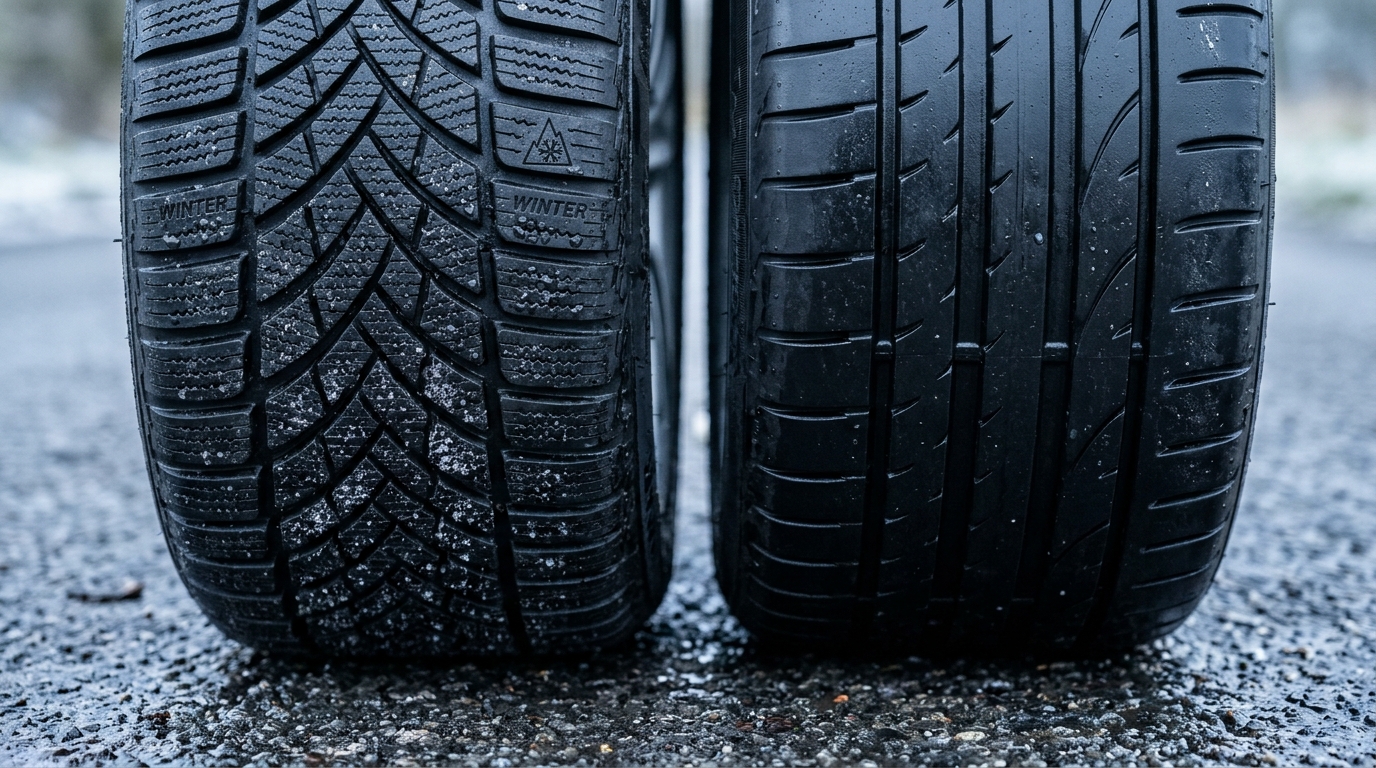
Summer tread compounds use low-silica polymers engineered to withstand high frictional heat. Below 7°C, the compound stiffens like hard plastic. It cannot key into the micro-fissures of asphalt, causing stopping distances to increase by up to 35% in cold, wet conditions.
❄️ Dedicated Winter Tyres (Below 7°C)
Formulated with high-silica rubber compounds and natural oils that remain pliable down to -30°C. Soft rubber conforms to cold tarmac, while thousands of microscopic zigzag sipes deliver mechanical bite against frost, slush, and packed snow.
When Should You Fit Winter Tyres? (The 2-Week Rule)
While British law does not mandate a specific calendar date for seasonal swaps, automotive engineers recommend the Two-Week Morning Temperature Rule:
- Monitor Your 7:00 AM Commute Temperature: When early morning temperatures consistently average below 7°C for two consecutive weeks—typically late October in Scotland and northern England, or mid-November in the south—it is time to book your tyre swap.
- Beat the First Frost Rush: Fitting centres across the UK experience high demand and inventory backlogs during the first sharp frost. Scheduling fitment early guarantees access to preferred sizes without fitting delays.
- Spring Changeover Window: Once daily temperatures hold consistently above 8°C–10°C (usually late March or early April), switch back to your summer set to protect winter tread from accelerated wear.
Winter vs All-Season vs Summer Tyres: Direct Comparison
| Performance Metric | Summer Tyres | All-Season Tyres (3PMSF) | Dedicated Winter Tyres |
|---|---|---|---|
| Optimal Temperature | Above 7°C (Warm / Mild) | -5°C to +25°C (Year-Round) | Below 7°C to -30°C (Cold Specialist) |
| Cold Wet Braking (4°C) | Moderate (38–42 metres) | Good (30–32 metres) | Shortest (25–27 metres) |
| Snow & Slush Traction | Extremely Poor / Hazardous | Certified & Dependable | Maximum Mechanical Bite |
| Warm Weather Durability | Maximum Longevity | Balanced (25,000+ miles) | Rapid Wear Above 15°C |
| Seasonal Swapping | Not suitable for sub-zero conditions | None (Year-round fitment) | Twice-yearly swap recommended |
| Best Suited For | Garaged, southern commuter cars | 80% of typical UK driving routes | Highland, rural, and Pennine routes |
Sidewall Markings: Understanding 3PMSF vs M+S
Before purchasing cold-weather rubber online or through a local retailer, verify the sidewall certification symbols to ensure performance and compliance:
🏔️ 3PMSF (Three-Peak Mountain Snowflake)
This is the official certified standard defined by UNECE Regulation 117. Tyres bearing this emblem have passed standardized braking tests on compacted snow. Both dedicated winter tyres and genuine all-weather tyres carry this mark.
⚠️ M+S (Mud and Snow)
M+S is a manufacturer declaration based strictly on geometric tread pattern void ratios. It requires no standardized cold braking test. In several European countries, M+S tyres lacking the 3PMSF symbol are no longer legally recognized in designated winter zones.
5 Critical Safety Rules for Cold-Weather Driving
- Rule 1: Never Fit Just Two Winter Tyres: Fitting cold-weather rubber only to the drive axle creates severe traction imbalance. On front-wheel-drive vehicles, summer rear tyres will lose lateral stability during cornering, provoking uncontrolled oversteer spins. Always fit a matched axle set of four.
- Rule 2: Observe the 4.0 mm Winter Wear Limit: Although the UK legal minimum tread depth is 1.6 mm, cold-weather sipes lose their effectiveness below 4.0 mm. Once sipes wear flat, wet slush displacement drops sharply. Review our Tread Depth Replacement Guide.
- Rule 3: Account for Cold Inflation Pressure Loss: Ambient cold causes tyre air pressure to drop approximately 1 to 1.5 PSI for every 10°C decrease. Check pressures frequently using our Cold vs Hot Tyre Pressure Guide.
- Rule 4: Check Speed Rating Limits: Winter tyres often feature lower speed symbols (such as Q or T) compared to summer rubber. Refer to our Tyre Speed Rating & Load Index Guide and do not exceed the tyre’s certified ceiling.
- Rule 5: Maintain Roadworthiness Standards: Winter tyres are not mandatory under the UK Road Vehicles Regulations, but drivers bear legal responsibility for ensuring vehicle roadworthiness in adverse weather.
UK Highway Code Rules & Insurance Commitment (ABI)
Understanding how UK regulations and insurers treat seasonal tyre fitment ensures complete legal and policy compliance:
Highway Code Rules 228 to 231
Under Rule 228, drivers facing snow and ice must take extra precautions regarding tyre tread depth and grip. Rules 230 and 231 warn that stopping distances can increase by up to ten times on icy surfaces. While summer compounds struggle over frost crystals, siped winter patterns provide the interlocking edges necessary to retain directional control.
The ABI Winter Tyre Commitment
A persistent myth is that fitting winter tyres constitutes a vehicle modification requiring extra insurance premiums. The Association of British Insurers (ABI) established the Winter Tyre Commitment, joined by over 70 UK insurers, guaranteeing that fitting vehicle-appropriate winter tyres will never incur additional premium charges or administration fees, provided dimensions and ratings align with vehicle OEM specs.
Regional Climate Realities: Scotland vs Northern vs Southern Driving
Whether dedicated seasonal tyres are necessary depends largely on regional driving environments across the UK:
| UK Geographic Region | Average Sub-7°C Days | Annual Snow/Ice Exposure | Fitment Recommendation |
|---|---|---|---|
| Scottish Highlands & Borders (Aberdeen, Inverness, Cairngorms) | 55 to 75 Days | Frequent hard frost, packed snow & blizzards | Dedicated Winter Tyres Strongly Advised (Oct to Apr) |
| Northern England & Pennines (Yorkshire Dales, Cumbria, Peak District) | 40 to 55 Days | Frequent frost pockets & slush ruts | Dedicated Winter or 3PMSF All-Weather |
| Midlands, London & South East (Greater London, Kent, West Country) | 25 to 35 Days | Occasional light frost, predominantly cold rain | Modern 3PMSF All-Season Tyres (e.g. Michelin CrossClimate 2) |
Wheel Strategies: Dedicated Steel Rims vs Tyre Swaps
When selecting a seasonal tyre strategy, drivers generally choose between two setup methods:
- Option A — Biannual Tyre Swaps on Existing Alloys: Retain your factory alloy wheels and pay a garage to dismount and re-seat tyres each autumn and spring. While initial outlay is minimal, recurring seasonal labour fees accumulate, and repeated bead mounting introduces potential wheel scuffs.
- Option B — Dedicated Winter Wheels: Keep a dedicated set of robust steel rims or smaller secondary alloys fitted with higher-profile winter tyres. Steel rims resist road grit and winter corrosion, absorb potholes more effectively, and allow straightforward changeovers at home. Check our Wheel Torque Specs Guide for correct tightening sequences.
Frequently Asked Questions
No. Dedicated winter tyres are not legally mandated for passenger cars in the UK. However, motorists are legally required to maintain roadworthy tyres with sufficient tread and grip under the Road Traffic Act.
In most cases, no. UK insurers adhering to the ABI Winter Tyre Commitment treat standard-dimension winter tyre fitment as routine maintenance rather than a vehicle modification, meaning premiums remain unaffected.
While not illegal, it is strongly discouraged. Above 15°C, high-silica rubber compounds soften excessively, leading to accelerated tread wear, higher fuel consumption, and noticeably longer braking distances in warm weather.
Yes. For roughly 80% of UK motorists living in central, southern, or urban zones that rarely see sustained heavy snowfall, 3PMSF-certified all-season tyres provide an ideal balance without requiring biannual wheel swaps.